Anyone who has ever taken a Creative Writing course knows the name Flannery O’Connor. She is known for her unique descriptions, gothic style tinged with absurdism, and stories that generally paint unflattering portraits of American life in the south.
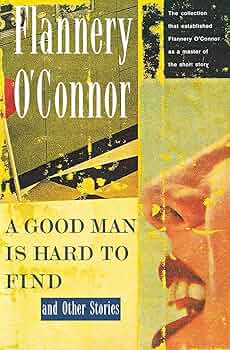
Ten years after first being introduced to her in undergrad, I read her collection, “A Good Man is Hard to Find: And Other Stories.”
I had never read so many of her stories back to back, and it gave me some new insight and opinions on her writing.
The collection includes her famous “A Good Man is Hard to Find”, “The Life You Save May Be Your Own”, and “Good Country People”, but these were not the stories that spoke to me this time around.
Her Descriptions
O’Connor has been praised for all sorts of literary reasons, including her word choice. This is partially because her diction can be jarring, and even ridiculous, but it works for her.
One thing I noticed was how she uses descriptions to paint homely (or worse) descriptions of people. One of my favorite examples: “…another picture of a man whose eyebrows dashed out of two bushes of hair and clashed in a heap on the bridge of his nose; the rest of his face stuck out like a bare cliff to fall from” (p30, The River). The description is an action while simultaneously giving an easy visual. Too many descriptions of people in other books are passive rather than an active part of the story.
It reminded me of the way Charles Dickens often created unattractive but incredibly unique personalities in his books. It doesn’t make you want to love the characters, but it does create a feeling of realism that can be hard to beat.
Her Themes
In general, O’Connor’s writing was darker than I remembered. Her themes often deal with the selfishness of adults — men in particular — and how children often receive the short end of the stick because of it.
While “The Life You Save May Be Your Own” incorporates all of those themes perfectly, I was struck more by the visceral writing in the “River” and “A Late Encounter with the Enemy”:
- The former follows a young boy trying to find salvation in a world full of self-absorbed and self-righteous adults. It reveals the unflattering world of childcare and makes dangerously clear the harm that adult agendas and neglect have on children.
- In the latter, an ancient veteran of the Confederate army goes to his granddaughter’s college graduation. His bitterness, entitlement, and denial of reality has made him a difficult person, and O’Connor seems to relish in the events that unfold for him.
Both of these stories ground themselves in a reality that I have no experience of because I grew up on the West Coast as a Millenial-Gen Z cusp. But the horrors that O’Connor writes about are still plausible and chilling.
My Favorite
Of all the stories in the collection, one stands out the most: “A Stroke of Good Fortune.” The premise of a woman climbing a set of stairs while having an internal monologue is so deceptively simple that the final revelations hit all the harder.
I loved the form the story took: Ruby’ stream of consciousness while she deals with the fear of having a stroke is captivating and builds on itself brilliantly. Her interactions with her apartment neighbors and the way her own preoccupation with others keeps her from objectively viewing herself are relatable and poignant.
Most of all, the dichotomy of the ending haunts me; on one hand it is not as disturbing as some of the other stories, but at the same time there is a feeling of inevitable doom. It is a wonderful balance that inspires me, and I hope to use it in my own writing soon.
 Grant Pearson
Leave a comment