Leave a surprise for your readers in every paragraph.
This writing advice was gifted to me during my undergraduate creative writing fellowship, but I did not understand it until I started reading Terry Pratchett.
His writing is brilliant, hilarious, and unique. I originally discovered Pratchett because of Good Omens, a clever and humorous take on the end of the world with a tv show adaption that I highly recommend.
The late Sir Terry Pratchett is known for writing Discworld: a comic fantasy series with over 40 books about a flat planet resting on the back of four elephants riding a space turtle through the cosmos.
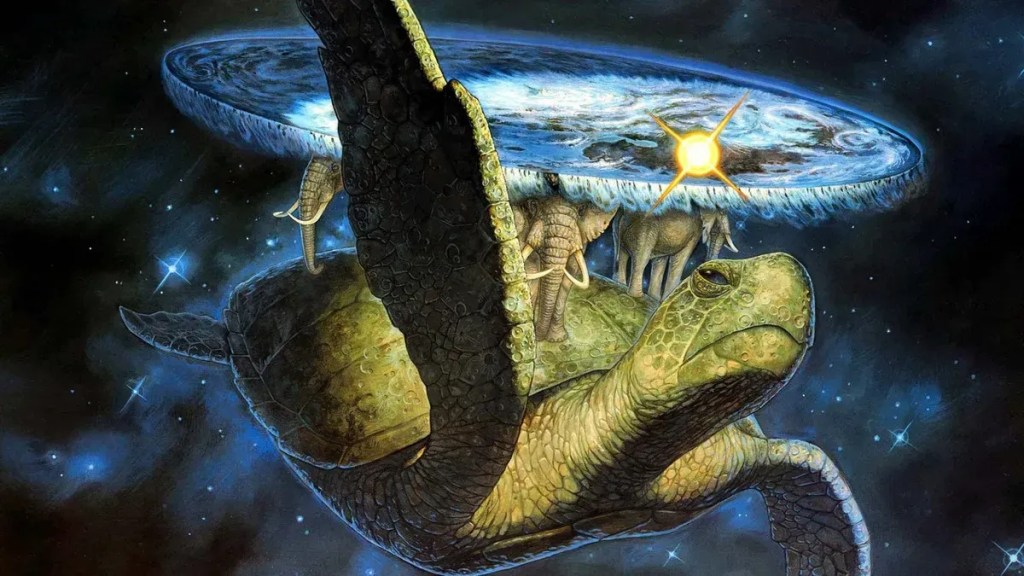
So far I have only read 3 books in the immense absurdist fantasy series, but it has been a wonderful break from the dark fantasy that has flooded the market since Game of Thrones. Pratchett’s lighthearted stories are quite different from modern fantasy epics. The novels tend to trace the life and growth of an entire city/realm rather than following a single protagonist. The broader scope is perfect for his comedic storytelling, though it can be a little less emotionally intimate.
The best part about the stories is that Pratchett knows how to leave a surprise for the reader in every paragraph.
His use of language, especially for descriptions, are often unexpectedly humorous, twisting logic and meaning. He knows how to give personality to everything from a embarrassed sunset to a reproducing city with a single sentence. Every page is full of little jokes and amusing metaphors.
One recurring character is the personification of death called Death. In the first book I read, Mort, the narrator explains why Death rides a real flesh and blood horse: because with a skeleton horse, he kept having to stop and wire bits of it back on.
This amusing joke became even better when Pratchett explained again why Death rides a real horse in a sequel novel. When other people write a sequel, they often use similar descriptions to the original to remind readers of the world, but Pratchett puts his own twist on this. Instead of repeating himself, he explains that Death does not like any of the mythical horses, such as the fiery horse, because they have the unfortunate habit of setting their own bedding on fire and standing in the middle of it looking embrassed.
In essence, it is the same joke, and it conveys the same information on the practical nature of both Death and living horses. But the fact that it is not identical makes it a surprise, makes me smile if not outright laugh, and makes the writing even more entertaining. He does this over and over, building on his own jokes across the series.
There are so many words and tropes in the universe, and Sir Terry Pratchett knew when and where to flip them on their heads. People are even turning his world into a tabletop roleplaying game based on wordplay.
…
What surprises do you like to find as you read?
 Grant Pearson
Leave a comment