We all know sedentary lifestyles are unhealthy, but it takes high levels of disciple to escape them. While I am on my feet for more than 75% of my working time, I often sit in front of the TV, table, or desk while at home. Most of my hobbies are seated, which is likely to blame for my incessant hip and back pain at 30 years old. It also makes me wonder about my children:
How old should children be before being exposed to screentime? And how much is too much?
The American Academy of Pediatrics (AAP) and the U.S. Centers for Disease Control (CDC) are often quoted for their advice by both children’s hospitals and Mayo Clinic.
They suggest no screen time from birth to age 2, except for facetime and adult-accompanied educational material. Orange County Children’s Hosptial (CA) had an insightful article about the specifics. Their resident expert, Dr. Michelle Yang, expressed three important reasons connected to the recommed limits:
- “The studies overall have shown that there is definite improvement of learning when there’s a physical presence of adults in the room”
- “[Other studies/experts] started to realize that perhaps these videos are categorized more as an imaginary concept rather than a real-world concept, and ultimately doesn’t become translated into their development.”
- “When there was background TV, parents tended to talk less. The tended to be more passive in their interactions with their children when the TV was on.”
From a teacher’s perspective, these observations make logical sense and are part of our good practices. For example, when showing a video to teach or review an idea in class, there is an easily identifiable difference between classes that watched the 10+ minute video on their own versus if they had adult interaction.
In classes in which I stop the video every 2-3 minutes and require them to discuss/respond to the information, they have much higher levels of engagement and absorption of the material as evidenced through notetaking and follow-up assignments.
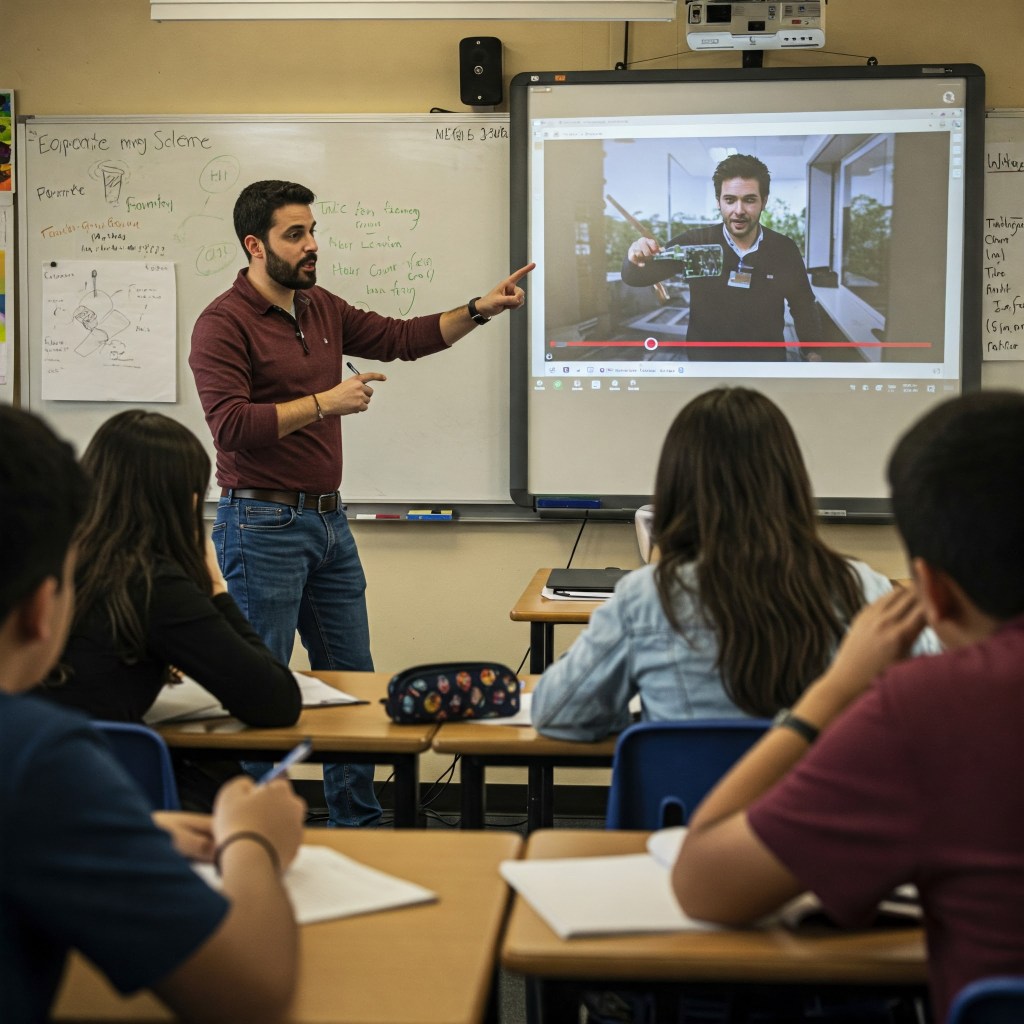
This suggests that children/students need a physical representation of the knowledge to make the digital information real and further validates Dr Yang’s statements.
The suggestions also lend insight into why distance-learning and education during Covid-19 had such measurable losses and systemic repercussions:
So much of learning (regardless of age) is done through verbal communication and language development, which makes this one of the most important skills for children to learn. If children are getting less exposure to physical in-person language, then they will have weakned learning abilities.
Texting and social media does not help, which is why the AAP further advices that “Children should not sleep with devices in their bedrooms, including TVs, computers, and smartphones.” And if you look for an answer to the how much time is too much, they answer with: “Unfortunately, there isn’t enough evidence demonstrating a benefit from specific screen time limitation guidelines.”
While some studies have suggested that small amounts of unsupervised screentime could be beneficial for mental health and relaxation purposes, the experts are clear: limit that time as much as possible for as long as possible.
Instead: be active and engaged. Of course as a sleep-deprived working parent in a shrinking economy, that is probably easier said than done.
 Grant Pearson
Leave a comment