Ursula K Le Guin was a rockstar of a writer. She lived from 1929-2018 and wrote 23 novels and change, covering sci-fi, fantasy, and more. I have heard some people praise her as the mother of science fiction, since she invented the idea of the Ansible, and I have heard others claim she was overrated.
But if you read her works, you should be able to agree at the very minimum that they are classics and incredibly thoughtful.
Thought Experiments
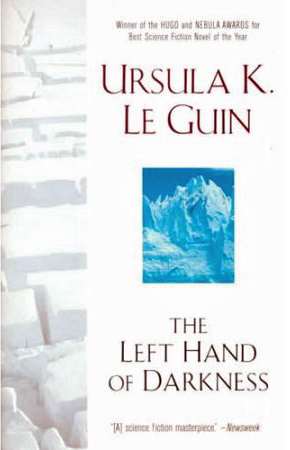
One idea I admired about her was the way she treated writing (and her sci-fi in particular) as thought experiments. She talked about this in the introduction to her famous and controversial Left Hand of Darkness. She discusses how writing is about telling fictional stories and fabricating lies to discover hidden truths, and I liked the way she puts that. Additionally, she talks about how science fiction should never be treated as versions of the future but instead as thoughtful critiques of the cultures in which they were written.
Left Hand of Darkness does exactly that. Published in 1969, it tackles the systemic mistreatment of women through the lense of a planet on which no-one has an assigned gender.
It explores how different society, politics, and family life would be in this world, and how in comparison strange people like us would appear to be sexual deviants.
The story unfolds in a classical travelogue style from a narrator from an Earth like ours, which lends a needed comparison.
Travelogues & Enjoying the Ride
I love the idea of travelogue writing because it makes new discoveries seem more grounded in reality. Some people find them boring because of the daily discussion of weather and the monotony of travel, but our society has also grown used to fast-paced action films that are loud, bright, and in our faces.
I think we have forgotten how to appreciate the slower wandering gate. If we could view each day as a new kind of discovery, I think we would learn to appreciate it more.
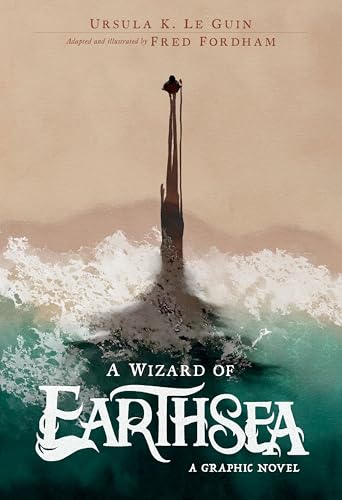
I have also read some of Le Guin’s fantasy, including A Wizard of Earthsea (which is being turned into a graphic novel!).
I quite enjoyed the story and its similarities to Tolkien’s own elegant writing.
There is far less of the emotional whiplash and action montages that fill the majority of YA novels, but I am learning to appreciate the slower and steadier pace as I age.
Writing Small
The story that affected me the most was her short story called The Ones Who Walk Away From Omelas. It is a five page description of how a magical city exists where everyone is always happy and the harvest is always good because their happiness hinges on the nonstop abuse of a single child.
“…but they all understand that their happiness, the beauty of their city, the tenderness of their friendships, the health of their children, the wisdom of their scholars, the skill of their makers, even the abundance of their harvest and the kindly weathers of their skies, depend wholly on this child’s abominable misery.”
-Ursula K Le Guin, The Ones Who Walk Away From Omelas
What I think is particularly moving is that every person in the city knows the abuse is happening; most of them ignore it, and the rest leave. The reason I find this so moving is because it is an apt description of how the real world works: how so many people find happiness in their lives despite knowing about and often benefiting from the misery of others.
Writing coaches, journalists, and novelists will all tell you: when you want to write about a really big issue, always write small. A single life. That is the story people connect to. And that is just one of the skills I hope to learn from Le Guin’s writing.
 Grant Pearson
Leave a comment