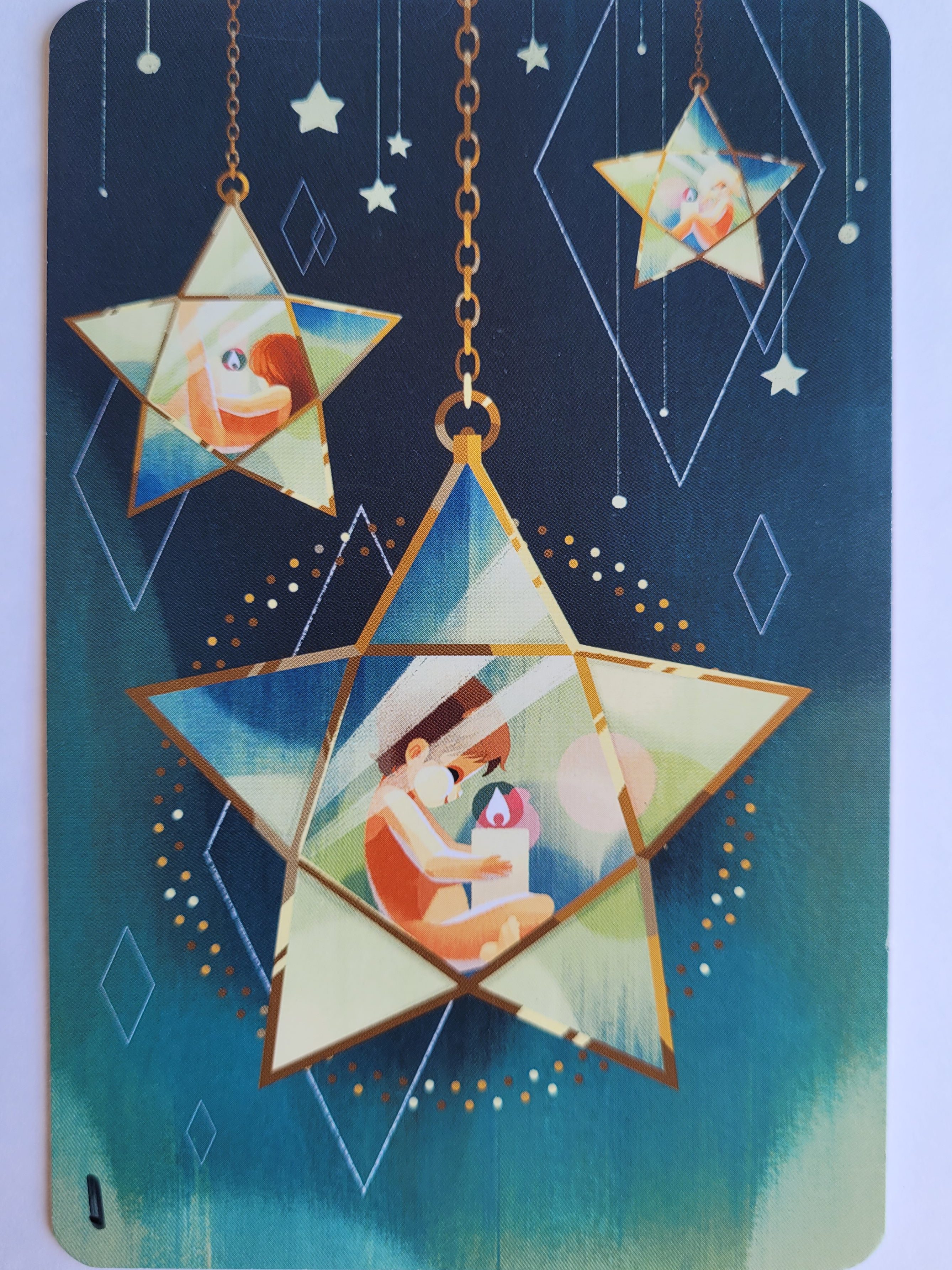
The star flared, flashed, and held still, pinging its message across the interminable abyss that separated it from its siblings. Inside the molten gas giant, a child held its hands around an unlit candle and waited for the response which would come with the next set of flashes.
In the meantime, it watched the unstoppable force of the cosmos swirl around it. It could feel its turn approaching and waited with a collection of anxiety, fear, and desire that sparked in its chest. This wouldn’t be its first time, but the awe and despair of the choice never changed.
Most of the stars had experienced life as a human several times – or at least tried several times. Most of them had not had pleasant endings: some died by abortion and others in childbirth, barely conscious of anything except for an extended period of growth, comfort, warmth, and then suffocating pain.
Others made it a few years into childhood, only for their emerging concept of self to be stolen by hunger or sickness. Both were terribly lonely ways to go, accompanied by confusion, anger, and an inescapable helplessness. More lived through childhood, but only a lucky few made it unscathed.
The star reflected on what it had learned from its siblings: there were no good ways to die. If they made it long enough, they could make a difference in the world, but if they made it too long, then they would be treated like they were in the way. It was an exhausting cycle of daily misery, occasionally enriched by chocolate treats, by embellished tales of strangers who overcame their misery, and by love.
“You don’t have to go,” came one response in a flicker of light from afar.
The child inside the star appreciated the sentiment. It would be its choice, but if it chose not to go, how long would it have to wait for another chance? Would the next opportunity be better? There was no way to know, and someone had to go.
“If I go, do you think we will meet on Earth?” it sent back. It wanted comfort now, support in the face of the impending gamble. It closed its metaphorical eyes, breathed in the warmth of the sun that fed it, and waited.
“If you don’t take the chance, we will never know,” another sibling responded.
When someone else had the chance, it was easy to say, “Yes, do it,” but when it was its own turn, it was much harder. The child considered the questions than haunted each of its waking moments in the vast infinity of light bubbling around it:
Would its parents want it there? Would they love it regardless of the color of its eyes or shape of its genitalia? Would they have enough money to care for it? Or would they work themselves to the bone, stressed out of their minds, to provide for another hungry soul? Would they beat it and call it names? Would they hold it close and sing it to sleep? Or both? Would it become a good parent? Would it find a compatible partner? Or would it ruin the lives of others in its selfishness?
That was the conundrum: Anything was possible.
And then the candle flickered to life: its notice. It had exactly one moment between now and eternity to choose: would it take the pain of living daily in a fragile frame for the chance at a few ephemeral moments of joy?
As the question lingered, the child in the sun let out a spark of laughter: Ephemeral was the wrong word; while the moment itself was brief, the memories didn’t die with the body.
The star took the equivalent of a deep breath and spun its lights in a fanfare of goodbyes to its siblings across the universe. It had made its decision, and it reached for the candle, flickering with a once in an eternity of chances. It squeezed out the flame and felt its very being sucked away across space as its soul took on mortal form.
A thousand glittering stars waved back, accompanied by a thousand, “Good luck”s. It felt the thrills of joy and fear as the tunnel of light faded. It was comforted by the thought that the light would greet it again upon its return.
For good or ill, it chose life.
 Grant Pearson
Leave a comment